
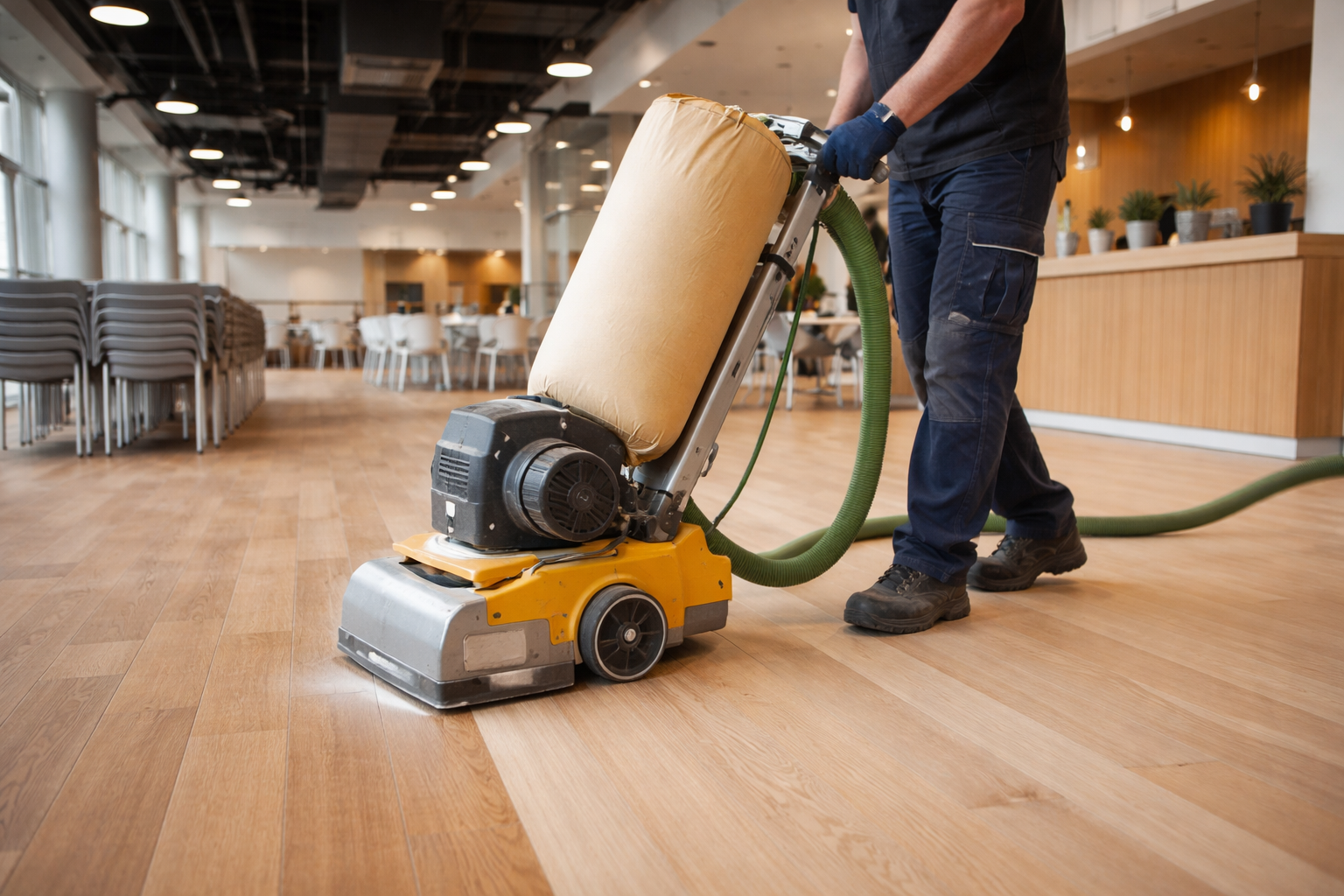
How Commercial Floor Sanding in Bracknell Helps Businesses Reduce Downtime
When worn timber floors start to affect the look, cleanliness and day-to-day practicality of a commercial premises, the challenge is rarely whether restoration is worthwhile. The real concern is disruption. Shops, offices, restaurants, salons, galleries, schools and hospitality venues across Bracknell need a solution that improves presentation without causing unnecessary closure. That is where Bracknell Floor Sanding comes in. We provide professional commercial floor restoration with careful planning, dust-controlled systems and durable finishing options designed to help businesses return to normal trading as quickly as possible.
For commercial clients, floor sanding is not simply a cosmetic upgrade. It is an operational decision. A scratched, dull or uneven wooden floor can undermine first impressions, create maintenance problems and make an otherwise well-run business look tired. By contrast, a freshly restored timber floor immediately lifts the environment, improves perceived standards and supports a more professional customer experience. The key is carrying out the work with minimal downtime, clear staging and the right finish for the volume of foot traffic expected.
In this guide, we explain how commercial floor sanding works, why downtime can be controlled far more effectively than many business owners assume, and what Bracknell companies should consider before booking restoration work.
Why Commercial Floors Need a Different Approach
Commercial timber floors face far greater pressure than most domestic floors. Daily footfall, moving furniture, wheeled equipment, cleaning regimes, entrance grit and spills all accelerate wear. In retail settings, the floor is part of the brand environment. In offices, it affects how visitors and staff perceive the space. In hospitality venues, it contributes directly to atmosphere and customer confidence. In every case, the floor has to look good while standing up to regular use.
That is why commercial floor sanding requires more than a basic sand-and-seal job. It needs proper assessment of timber species, existing coatings, wear patterns, edge damage, subfloor movement, moisture risk and the expected service demands once the floor is back in use. A busy Bracknell café, for example, needs a different finishing strategy from a boutique office reception or a function room that is only used on selected dates.
At our Bracknell floor sanding service, we treat commercial projects as operational restoration work. The aim is not just to make the timber look better, but to restore it in a way that supports the business behind it.
The Real Cost of Leaving a Commercial Floor Unrestored
Some businesses postpone sanding because they worry about closure. In reality, delaying the work often creates a different type of cost. Once a finish has worn through, the exposed timber becomes more vulnerable to staining, abrasion and deeper surface damage. Marks become harder to remove. Cleaning teams have to work harder to maintain appearance. In customer-facing premises, the space can start to look neglected even if the rest of the business is well presented.
There is also a commercial image issue. Customers notice surfaces, even when they do not consciously think about them. A clean, even, professionally finished wood floor helps a premises feel established, cared for and trustworthy. A dull, patchy or scratched floor can do the opposite.
Timely restoration is usually more cost-effective than waiting until boards need extensive repair or replacement. Businesses that act early often preserve more of the original timber and keep the project shorter, cleaner and easier to schedule.
How We Minimise Downtime for Bracknell Businesses
Downtime is the central concern for commercial clients, so every stage of the work should be planned around it. Our approach focuses on efficiency without cutting corners.
1. Careful Pre-Project Assessment
The first step is understanding how your premises operates. We look at the size of the area, the type of business, access arrangements, furniture removal, noise sensitivity, drying windows and the finish most suitable for the floor’s future use. This allows us to recommend the most practical working pattern from the outset.
2. Out-of-Hours Scheduling Where Possible
Many commercial sanding projects can be arranged outside core trading hours. Evening, weekend or staged work can reduce the need for full closure. This is particularly useful for offices, showrooms, independent shops and hospitality venues that want restoration carried out during quieter periods.
3. Staged Area-by-Area Restoration
Where premises layout allows, floor sanding can often be broken into sections. Instead of taking the whole site out of action, we can restore one area at a time. For example, a restaurant may phase dining zones, or an office may rotate meeting areas and circulation routes. This approach helps businesses remain partly operational while the work progresses.
4. Dust-Controlled Sanding Systems
Modern commercial sanding is far cleaner than many people expect. Professional dust-controlled equipment captures the vast majority of airborne dust at source, helping keep surrounding areas cleaner and making the process more manageable in business environments. This matters especially in retail, hospitality and office spaces where residual mess would create obvious disruption.
If you want to see how modern dust-controlled restoration changes expectations, our recent article on hardwood floor sanding in Bracknell for dust-free perfection explains why updated systems are a major advantage over older methods.
5. Fast, Appropriate Finishing Systems
Not every commercial floor should receive the same finish. Some businesses benefit from high-performance lacquer systems, while others prefer oil-based aesthetics and repairability. The right product depends on traffic levels, maintenance expectations and the appearance you want to achieve. Choosing correctly at the start helps avoid unnecessary future downtime.
What the Commercial Floor Sanding Process Typically Involves
Although every site differs, most Bracknell commercial projects follow a structured restoration sequence.
Initial Inspection and Planning
We inspect the timber floor to assess wear, damage, coating build-up and any repair requirements. We also review access, working hours and room usage so the restoration can be programmed sensibly.
Preparation of the Area
Furniture, fixtures and operational obstacles need to be cleared or protected. A well-prepared site saves time later and reduces the chance of interruptions during sanding.
Professional Sanding Sequence
The old finish and damaged top layer are removed using a professional grit progression tailored to the timber and floor condition. In commercial restoration, this must be done evenly and methodically to avoid chatter, swirl marks and inconsistent colour. Edge work, corners and perimeter detailing are then blended with the main field area.
Our article on wood floor sanding in Bracknell gives a useful overview of how proper restoration transforms tired boards and why process quality matters.
Repairs Where Needed
Minor board replacement, localised filling and stabilisation may be carried out before final finishing. In commercial premises, this stage is important because surface presentation matters just as much as structural reliability under traffic.
Sealing and Finishing
Once the floor is properly prepared, we apply the chosen finish. For many commercial settings, a durable high-traffic lacquer system is the most practical choice because it offers strong surface protection and supports a quicker return to service. Products such as Bona Traffic HD are designed for demanding wooden floor environments. In other settings, a quality hardwax oil such as Osmo Polyx-Oil may be preferred for its natural appearance and maintainability.
Curing and Reoccupation Guidance
Once finishing is complete, the floor must be allowed sufficient time before normal use resumes. Exact timings depend on the product used, site conditions and traffic demands. Clear aftercare guidance is essential so businesses can reopen with confidence and protect the restored finish from avoidable early wear.
Which Bracknell Businesses Benefit Most from Commercial Floor Sanding?
Commercial timber floor restoration is suitable for a wide range of businesses and organisations in Bracknell, including:
- retail shops and boutiques
- restaurants, cafés and bars
- offices and reception areas
- salons, studios and wellness spaces
- schools, halls and community venues
- galleries, display spaces and event venues
- rental and managed commercial properties
In all of these environments, restored timber contributes to a more professional atmosphere and often proves more economical than replacement when the existing floor is still fundamentally sound.
Choosing the Right Finish for Heavy Commercial Use
Finish selection has a major impact on both appearance and operational downtime. Businesses often focus on colour and sheen, but durability, recoat potential and drying profile matter just as much.
Commercial Lacquer Systems
High-performance lacquers are frequently the best fit for busy commercial premises. They create a durable protective layer on the surface and are well suited to environments with regular foot traffic. For reception areas, shops and hospitality spaces, this can be the most practical solution where resilience is a priority.
Hardwax Oils
Hardwax oil systems provide a more natural, low-sheen appearance and are valued for their repair-friendly character. In lower-impact commercial spaces or design-led environments, they can be an excellent choice. The key is matching the finish to the actual working conditions rather than choosing on looks alone.
We also recommend planning maintenance from day one. The best commercial floors are not those that are ignored for years, but those that are cleaned correctly, monitored properly and recoated before the finish fails completely.
How to Prepare Your Business for Floor Sanding
A smoother project starts with practical preparation. If you are planning commercial floor sanding in Bracknell, the following steps help reduce delay:
- identify your quietest trading period
- decide whether phased work is possible
- remove movable furniture and stock in advance where practical
- inform staff, tenants or customers early if access will change temporarily
- confirm the expected return-to-use window for the chosen finish
- schedule deep cleaning after completion only if recommended
Good communication and timing can make a major difference. In some cases, a project that initially seems disruptive can be managed with surprisingly little operational impact once the work is properly planned.
Why Professional Expertise Matters More in Commercial Settings
Commercial floors are less forgiving than domestic ones. Mistakes are more visible, wear returns faster under heavier traffic and any delay has a financial knock-on effect. That is why professional standards, correct sanding technique and proven finishing systems matter so much.
Industry guidance around good timber floor practice and technical standards also underlines the importance of proper process and material selection, as reflected in NWFA technical standards. In practice, that means assessing moisture risk, using an appropriate sanding sequence, preparing the surface properly and applying finishes that suit real site conditions.
Businesses that try to cut costs with improvised or inexperienced work often end up paying more later through patchiness, premature wear, inconsistent sheen, reopening delays or early recoating requirements.
Why Bracknell Businesses Choose Us
At Bracknell Floor Sanding, we understand that commercial clients are not just buying a nicer floor. They are buying a restoration service that has to work around operations, deadlines and customer expectations. That means clear communication, realistic planning and workmanship that stands up to scrutiny.
We help businesses across Bracknell restore timber floors in a way that balances appearance, durability and minimal downtime. Whether you manage a customer-facing venue, a private office, a hospitality setting or a multi-use commercial space, we tailor the project to the way the premises actually functions.
If your timber floors are worn, dull or becoming harder to maintain, now is the right time to act before deeper deterioration sets in. You can view our floor sanding prices, explore our recent restoration content, or contact us directly to discuss the most practical schedule for your site.
Final Thoughts
Commercial floor sanding does not have to mean prolonged closure or operational chaos. With the right planning, modern dust-controlled equipment, suitable finishes and an experienced team, Bracknell businesses can restore worn wooden floors efficiently and professionally. The result is a cleaner-looking, harder-working and more impressive premises that supports your business rather than distracting from it.
If you want commercial floor sanding in Bracknell with a strong focus on minimising downtime, speak to our team today and arrange an assessment of your premises.


